
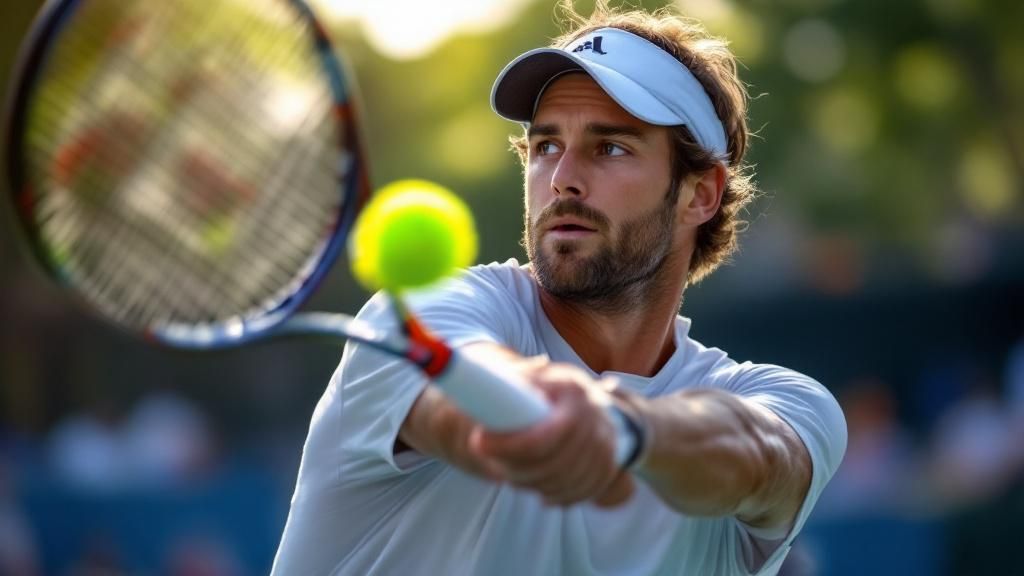
Tennis calls for dynamic strength, rapid directional changes, and unwavering mental resilience—yet even the most accomplished players encounter a considerable threat: bodily harm. From Roger Federer’s planned downtime to Serena Williams’ rigorous training protocols, elite professionals have mastered the art of damage avoidance. This article explores the core strategies these elite performers employ to preserve competitive edge whilst preserving their physiques. Discover the scientifically-backed strategies, training protocols, and restoration techniques that separate champions from the rest, enabling continued winning results at the sport’s elite level.
Active Warm-Up Routines and Movement Preparation
Elite tennis players recognise that a comprehensive warm-up goes well past a few casual stretches. Dynamic warm-up protocols serve as the cornerstone of injury prevention, conditioning muscles, joints, and the cardiovascular system for the intense demands ahead. Professional athletes follow systematic preparation that gradually increase cardiovascular engagement whilst activating stabiliser muscles essential to tennis movements. These protocols generally include low-intensity cardiovascular work, active mobility work, and tennis-specific drills that mirror match conditions, ensuring the body transitions smoothly from inactivity to match-level exertion.
Mobility work enhances dynamic warm-ups by resolving movement restrictions and muscle imbalances. Tennis players dedicate considerable time to developing joint mobility, particularly in the shoulders, hips, and ankles—areas experiencing extreme stress during play. Utilising foam rollers and mobility drills with targeted stretching, players progressively enhance their movement capacity. This investment in mobility minimises movement compensation strategies that often trigger injury, whilst also improving stroke efficiency and court movement abilities.
Pre-Match Activation Routines
Pre-match warm-up sequences serve as the final preparation stage prior to competitive play commences. Elite athletes implement activity-tailored exercises that cognitively engage them whilst physically conditioning their muscle-nerve connections. These routines generally run for around twenty minutes and feature gradually intensifying actions, movement variations, and explosive actions mimicking match scenarios. By gradually increasing intensity, players reach ideal activation states whilst enabling their physiology to attain maximum functional capacity without premature fatigue accumulation.
Tennis-specific activation encompasses lateral movements, explosive starts, and rotational exercises that activate the core stabilisers crucial to injury prevention. Players perform shadow strokes, shuttle runs, and ladder drills to engage fast-twitch muscle fibres and enhance movement technique. This focused method guarantees that the muscular, tendon, and proprioceptive systems function optimally from the opening point, significantly reducing injury risk throughout the vital opening phases when players are most vulnerable to sudden injury.
Court-Tailored Movement Preparation
Court-specific warm-up design customises warm-up protocols to the unique demands of playing surfaces and competitive environments. Professional athletes modify their activation routines in relation to court type—clay courts necessitate varied activation strategies than hard courts, whilst grass requires enhanced lateral stability. This surface-adapted training delivers optimal muscle activation and biomechanical efficiency for the specific court type. Coaches and athletes jointly develop routines that tackle court-related injury hazards, maximising performance whilst decreasing exposure to damage related to varying surface types.
Environmental factors markedly affect preparation strategies utilised by elite professionals. Temperature, humidity, and court conditions require individualised pre-match modifications to sustain optimal muscular flexibility and synovial fluid distribution. Players monitor these variables carefully, altering intensity and duration accordingly. This responsive strategy demonstrates the refinement of contemporary injury management, wherein professionals recognise that static protocols prove inadequate for tackling the changing conditions encountered throughout professional competition. Such attention to detail exemplifies elite-standard performance.
- Perform side-to-side movements across the baseline for improved side-to-side balance.
- Execute explosive split-steps to activate lower body stabiliser muscles.
- Complete rotating lunge exercises addressing core engagement and hip range of motion.
- Practise changes in direction simulating match-point scenarios precisely.
- Conduct progressive intensity sprints building cardiovascular readiness systematically.
Resistance Exercise and Muscle Development
Professional tennis players recognise that robust muscular conditioning forms the foundation of injury prevention. Comprehensive resistance training schedules address all key muscle areas, enhancing stability and resilience throughout the body. By developing balanced musculature, players substantially lower the risk of repetitive strain injuries and sharp impact injuries. Elite competitors allocate substantial effort to periodised strength protocols, ensuring consistent progression whilst sustaining optimal performance during match seasons.
Modern tennis necessitates explosive movements and quick shifts in direction, requiring tailored strength conditioning. Players employ resistance training, explosive movement drills, and compound movements that simulate competition requirements. This targeted approach strengthens supporting muscles frequently neglected in conventional training methods. As a result, players achieve improved movement efficiency, enhanced power generation, and markedly lowered injury risk, enabling them to perform at the highest standard throughout extended seasons.
Central Stability Development
The central musculature represents the kinetic chain’s focal point, managing force transmission between upper and lower body segments. Professional players emphasise core stability through focused training including plank holds, rotational movements, and anti-rotation work. A strengthened core improves balance, reduces spinal stress, and enhances serve and groundstroke mechanics. Sport-specific core training directly translates to injury prevention, enabling players to perform powerful shots whilst preserving postural control and balance.
Robust stability training goes further than basic ab work; elite players implement complex structural frameworks engaging deep core muscles including the transverse abdominis and obliques. Active core exercises conducted on variable terrain further challenges proprioceptive systems. This thorough methodology fortifies the body’s central support structure, channelling forces efficiently during explosive movements. As a result, players achieve improved movement control, decreased spinal stress, and enhanced overall athletic performance across challenging fixture lists.
Lower Body Resilience Building
Leg strength is closely linked to injury avoidance in elite tennis, where powerful lower body actions generate power for serves, rallies, and court positioning. Comprehensive leg conditioning programmes emphasise quadriceps, hamstrings, glutes, and calf musculature development. Players implement progressive resistance training, unilateral movements, and match-simulation drills replicating match demands. This targeted strengthening protects lower limb joints from repetitive strain whilst enhancing movement efficiency and athletic longevity.
Elite practitioners acknowledge that balanced lower body development prevents compensatory movement patterns that precipitate injury. Unilateral exercises, particularly single-leg squats and forward lunges correct strength disparities across legs. Eccentric training protocols build muscular strength during lengthening phases, vital for controlling rapid directional changes and deceleration movements. These sophisticated conditioning methods significantly decrease ACL injuries, meniscal injuries, and ongoing joint problems, allowing sustained competitive participation at elite competitive standards.
- Single-leg squats improve unilateral strength and movement stability
- Bulgarian split squats build quad and glute strength effectively
- Nordic hamstring curls strengthen back of the leg eccentric capacity
- Lateral lunges engage adductors and improve side-to-side control
- Calf raises improve ankle strength and propulsive force generation
Rehabilitation Strategies and Long-Term Injury Management
Elite tennis competitors understand that recovery matters just as much as training itself. Deliberate rest periods, paired with focused rehabilitation sessions, permit the body to heal small muscle tears and strengthen stronger muscle fibres. Leading competitors utilise planned periodisation cycles during the competitive season, alternating between intense competition blocks and planned recovery periods. This method reduces accumulated tiredness and preserves peak physical condition whilst lowering risk of injury in key competitive phases.
Prolonged injury management requires a thorough, multidisciplinary approach engaging physiotherapists, sports medicine specialists, and strength coaches. Professional players track biomarkers, use advanced imaging technology, and maintain detailed injury logs to recognise patterns and vulnerabilities. By resolving biomechanical underlying issues ahead of problems rather than after they occur, elite athletes extend their careers substantially. Consistent communication between healthcare teams and players ensures customised recovery protocols that adapt with individual needs and competition schedules.
- Introduce cryotherapy and ice baths right after strenuous matches
- Schedule consistent deep tissue massage sessions weekly across the season
- Apply elevation and compression therapy to minimise inflammation successfully
- Ensure adequate sleep hygiene with eight to ten hours nightly each night
- Include recovery days with active work comprising stretching and swimming
